In moments of political transition, societies often face a profound dilemma: how to transform public anger into credible justice. Bangladesh is confronting precisely that challenge today. After years of political repression, enforced disappearances, alleged extrajudicial killings and institutional decay under the Awami League government, the political upheaval of August 2024 created a widespread expectation that those responsible would finally be held accountable.
The demand for justice is understandable. In fact, it is morally unavoidable. For more than a decade, critics of the previous government alleged that the state had gradually evolved into an authoritarian system where opposition voices were suppressed, security forces operated with impunity, and institutions that were meant to act as checks on power often appeared aligned with the ruling political structure.
When such a system collapses or loses control, accountability becomes inevitable. Victims demand recognition. Families of the disappeared seek answers. Citizens expect that those who wielded power without restraint will finally face the rule of law. But the pursuit of justice is not simply a political act. It is also a legal and institutional one. And that is where Bangladesh may be making a critical mistake.
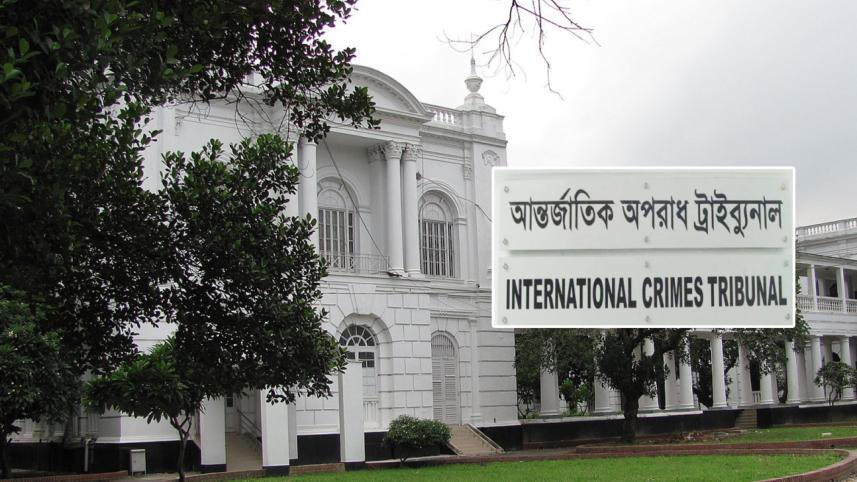
In the aftermath of the August transition, a large number of criminal cases have been filed against senior figures of the former regime. These include Awami League leaders, police officials, and other actors believed to have been involved in violence against protesters or political opponents. Some cases involve allegations of murder or enforced disappearance. Others have been framed under the International Crimes (Tribunals) Act of 1973, commonly referred to as the ICT Act.
At first glance, this might appear logical. The ICT framework already exists. It carries immense symbolic weight in Bangladesh. And it was historically used to prosecute some of the most serious crimes in the country’s past.
Yet the decision to rely heavily on this law to prosecute contemporary political abuses may prove deeply problematic. The ICT Act was never designed to deal with the type of systemic authoritarian governance that Bangladesh experienced in recent years.
To understand why, it is necessary to revisit the origins of the law itself. The International Crimes (Tribunals) Act, 1973 was enacted shortly after Bangladesh gained independence from Pakistan. Its purpose was clear and specific: to prosecute individuals responsible for genocide, crimes against humanity and war crimes committed during the 1971 Liberation War. The law reflected the trauma of that conflict. Millions of people had been displaced. Hundreds of thousands had been killed. The new state sought a legal mechanism to bring perpetrators of those atrocities to justice.
For decades, however, the law remained largely dormant. It was only revived in 2010 when the Awami League government established the International Crimes Tribunal to prosecute individuals accused of collaborating with the Pakistani military during the war.
Those trials were politically significant and emotionally charged. Many Bangladeshis believed they represented long-delayed justice for the crimes of 1971. At the same time, international observers raised concerns about procedural fairness, evidentiary standards and political influence over the process. These debates became a persistent feature of Bangladesh’s legal landscape.
Regardless of where one stands on those controversies, the fundamental point remains: the ICT Act was crafted to address crimes committed in a wartime context half a century ago. It was not conceived as a comprehensive framework for prosecuting modern authoritarian governance.
Yet today, Bangladesh is attempting to apply that framework to a very different set of political realities.
The alleged abuses associated with the recent period of rule do not resemble the wartime atrocities of 1971 in structure or context. Instead, they represent what political scientists often describe as systemic authoritarian governance: a system in which political control is maintained through a combination of coercion, surveillance, legal manipulation and institutional capture.
In such systems, repression is rarely the work of a single individual or even a small group of direct perpetrators. Rather, it is sustained by a broader ecosystem of actors. Political leaders set the tone and direction of the state. Security agencies carry out operations that may include arbitrary arrests, enforced disappearances or the suppression of protests. Intelligence agencies monitor and intimidate political opponents. Bureaucrats administer policies that reinforce political control. Elements within the judiciary may legitimise controversial actions through legal interpretation. Meanwhile, political activists and affiliated groups may operate on the ground as enforcers of the ruling party’s dominance.
This web of actors creates what might be called an enabling system of authoritarian rule. The challenge for any legal system attempting to prosecute such a structure is that responsibility is distributed across multiple layers of power. Direct perpetrators of violence may be identifiable. But the architects and enablers of the system often operate at a level where their involvement is indirect.
They may not have personally ordered a specific killing. They may not have been physically present at a particular incident. Yet their decisions, policies or institutional roles may have helped create the environment in which those crimes occurred.
Traditional criminal law struggles to address this complexity. Ordinary murder charges require prosecutors to establish a clear nexus between an accused individual and a specific act of violence. The court asks simple but demanding questions: Who ordered the crime? Who carried it out? What evidence links the accused to the act?
In many cases involving systemic political repression, the answers to these questions are difficult to prove beyond reasonable doubt.
This is why many countries emerging from periods of authoritarian rule have adopted specialised transitional justice mechanisms. These mechanisms are designed not merely to punish isolated crimes but to address broader patterns of abuse.
South Africa’s Truth and Reconciliation Commission, Argentina’s trials of military juntas, and various international tribunals established after conflicts in the Balkans and Rwanda all illustrate attempts to construct legal frameworks capable of addressing complex systems of violence and repression.
Bangladesh, however, appears to be relying on a combination of ordinary criminal cases and the ICT Act.
The problem with this approach is twofold-
- First, the ICT Act’s original historical focus on 1971 may make it an imperfect tool for addressing contemporary political crimes. The evidentiary structures, definitions and procedural assumptions embedded within the law were shaped by the circumstances of a wartime genocide, not by the dynamics of modern authoritarian governance.
- Second, the reliance on highly symbolic charges under the ICT framework risks politicising the process even further. If prosecutions appear to be driven by political motives rather than carefully constructed legal arguments, they may lose credibility both domestically and internationally.
There is also another danger. When individuals associated with an authoritarian regime are charged in cases that lack strong evidentiary foundations, those cases may eventually collapse in court. Acquittals in such situations can create a misleading public narrative: that those accused were innocent, or that authoritarian abuses never occurred.
In reality, the failure would not lie in the absence of wrongdoing but in the inability of the legal system to capture that wrongdoing within an appropriate legal framework. This is a recurring lesson in transitional justice around the world. Justice requires not only moral clarity but legal precision.
If Bangladesh wishes to hold former leaders, officials and institutional actors accountable for systemic abuses, it may need to consider developing a new legal architecture specifically designed for that purpose.
Such a framework could address several crucial issues. It could define categories of responsibility for those who designed, authorised or enabled patterns of repression even if they did not personally commit acts of violence. It could establish standards for evaluating command responsibility within security forces and political leadership. It could provide mechanisms for examining institutional complicity across different branches of government.
Equally important, it could incorporate procedural safeguards that ensure fairness and transparency in the judicial process. Without such safeguards, trials risk being dismissed as political revenge rather than legitimate accountability.
This distinction matters enormously for Bangladesh’s future. A society that emerges from authoritarian rule must rebuild trust in its institutions. Courts, prosecutors and investigators must demonstrate that justice is being pursued according to law rather than political convenience.
Otherwise, the cycle of politicised justice that has characterised much of Bangladesh’s political history may simply repeat itself in another form.
The temptation in transitional moments is always to move quickly. Public anger demands swift action. Victims and their families understandably want immediate recognition of their suffering. But justice that is rushed can easily become justice that is fragile. If Bangladesh truly wishes to establish accountability for past abuses, it must ensure that the legal framework it employs is capable of withstanding scrutiny in the years to come. Verdicts delivered today will shape the country’s historical narrative for generations.
They will determine whether Bangladesh is remembered as a state that successfully confronted its authoritarian past or as one that merely replaced one form of politicised justice with another. The International Crimes (Tribunals) Act of 1973 occupies a unique place in Bangladesh’s legal and historical memory. It was born from the trauma of the Liberation War and carries the moral weight of that moment. Using it without careful consideration in a radically different political context risks weakening both its historical significance and the legitimacy of current prosecutions.
Justice for victims of political repression is essential. But justice must be built on a legal foundation strong enough to sustain it. Otherwise Bangladesh may discover too late that it has mistaken the symbolism of accountability for the substance of it. And when that happens, the very idea of justice itself begins to lose its meaning.

Comments (0)
No comments yet. Be the first to share your thoughts!
Your email address will not be published. Comments are moderated.